Explore the Laboratory’s robotic systems and their capabilities for experimental research. Each system is presented with its research applications, key specifications and associated equipment.
Legged Robots
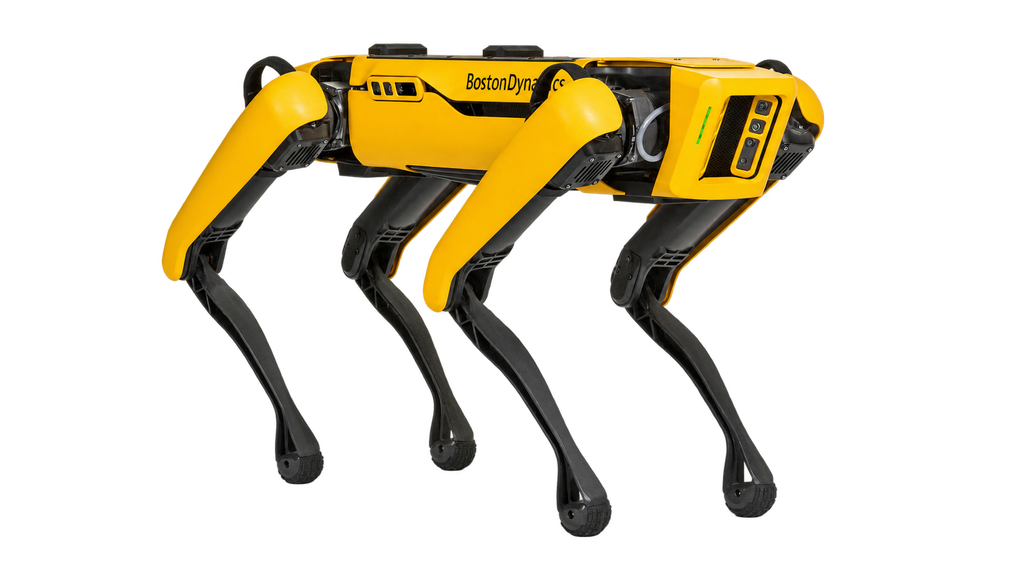
Boston Dynamics Spot
Incoming
A quadruped robotic platform for research in perception, autonomous navigation and mobile manipulation, capable of operating in indoor and outdoor environments.
Research use & technical specifications
Research capabilities
Boston Dynamics Spot provides a mobile platform for research in perception, localisation, mapping and autonomous navigation across indoor and outdoor environments, including stairs and uneven terrain. Potential applications include infrastructure inspection, environmental monitoring and robotic exploration.
Additional sensing and onboard computing can support application-specific data collection and embedded AI. Integration with the Spot Arm extends the platform to mobile manipulation and physical interaction.
Key specifications
- Maximum payload: 14 kg, shared across installed equipment.
- Maximum speed: 1.6 m/s.
- Average runtime: approximately 90 minutes, depending on payload and operating conditions.
- Environmental protection: IP54; operating temperature −20°C to +45°C.
- Programmability: API and Python SDK for custom applications.
Related equipment
Compatible sensing, computing and manipulation equipment is presented separately in the corresponding resource sections.
Aerial Robots
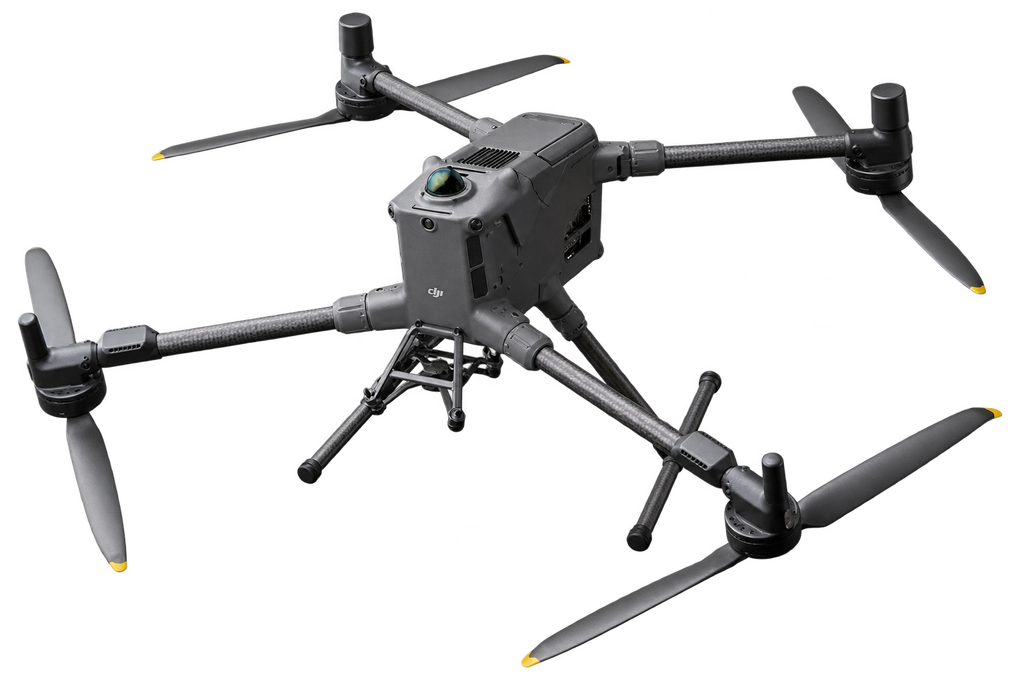
DJI Matrice 400
Incoming
An aerial robotic platform for research in mapping, remote sensing and environmental monitoring, supporting interchangeable payloads and precise positioning through RTK GNSS.
Research use & technical specifications
Research capabilities
Matrice 400 supports aerial data collection for mapping, infrastructure inspection and environmental monitoring. Depending on the installed payload, it enables experiments involving 3D reconstruction, thermal observation and multispectral or hyperspectral imaging.
RTK positioning and automated flight missions support repeatable surveys and the collection of georeferenced research data.
Key specifications
- Maximum payload: up to 6 kg, depending on mounting configuration and operating altitude.
- Maximum flight time: 59 minutes under manufacturer test conditions, carrying a Zenmuse H30T payload. Operational endurance varies with payload and flight conditions.
- Positioning: GNSS with RTK support.
- Obstacle sensing: integrated vision, LiDAR and millimetre-wave radar.
- Environmental protection: IP55.
- Payload integration: E-Port V2 interfaces for compatible equipment.
Related equipment
The Laboratory’s aerial imaging, mapping and environmental sensing payloads are presented separately under Sensing Systems.
Robotic Manipulators
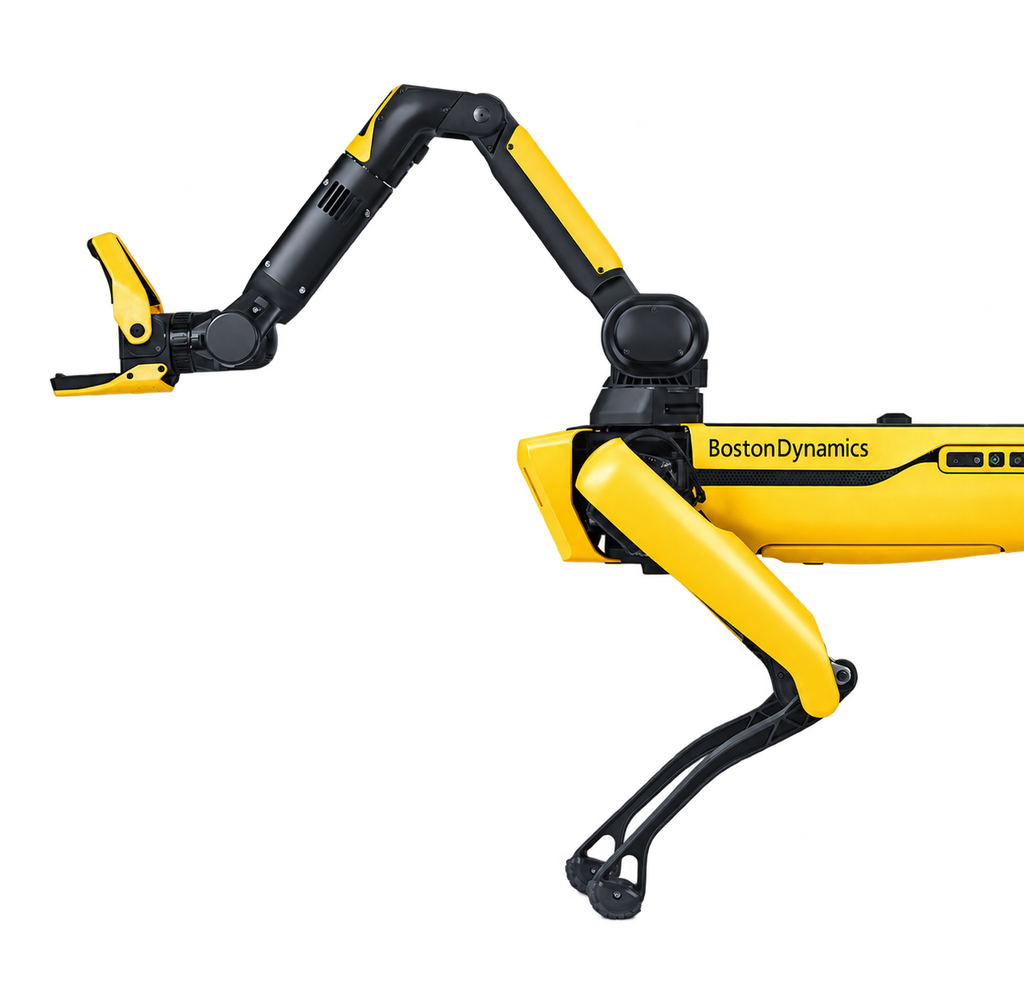
Boston Dynamics Spot Arm
Incoming
A robotic arm with an integrated gripper, mounted on Spot for research in grasping, object manipulation and coordinated mobility and manipulation.
Research use & technical specifications
Research capabilities
Spot Arm supports research in robotic grasping, manipulation planning, force control and physical interaction with the environment. Mounted on Spot, it enables the study of manipulation tasks that require both locomotion and arm movement.
Potential applications include picking and placing objects, operating handles and levers, and manipulating objects during inspection or assistance tasks.
Key specifications
- Degrees of freedom: 6, plus an integrated gripper.
- Arm length at full extension: 984 mm.
- Continuous lifting capacity: 5 kg at 0.5 m extension, measured at 22°C.
- Maximum gripper opening: 175 mm.
- Programmability: API access for joint-space control and Cartesian position, velocity and force trajectories.
Associated platform
Βoston Dynamics Spot. The arm operates as part of the mobile platform.